Logesty — Freight & Customs Clearance
An international freight and customs-clearance platform with four independent roles: client, company, operator and representative. Each freight type — sea, air and local — has its own order model and data, and every order moves through quotation, tracking, tickets and chat.
Overview
Logistics services platform: air, local and customs‑clearance orders, quotations and negotiation, suppliers and operators, multi‑currency, and a fully translated content layer on every table.
01The challenge
International freight is not one service: sea freight needs container data, air freight needs weights and dimensions, customs clearance needs documents and suppliers. Forcing them into one "order" produces a model that serves none of them.
Harder still, four parties work on the same order at once: the client asks, the operator executes, the representative follows up on the ground, the company prices — and if each has their own channel, the order’s context scatters across four conversations.
02What we built
We split each freight type into its own order model with its own data (sea with containers, air, local, and customs clearance), over a shared layer for pricing, tracking and payments — so the fields stay meaningful for each type.
Each role got its own routes and interface inside the same system: client, company, operator and representative — four separate route files under Laratrust permissions, but on the same order. Chat, tickets and tracking all hang off the order rather than the person, so its context never scatters.
The platform is multilingual at the data layer (a translation table per content entity), with automatic auditing recording who changed what — necessary in a domain where every change has a financial consequence.
03The outcome
All four parties work on the same order and see the same history, and a quotation request became a path inside the system instead of an email thread.
Each freight type is handled with its own correct data, so the operations team no longer fills fields that mean nothing for the shipment in front of them.
What the system does
The modules that were delivered and put into daily use.
-
01
Four independent order types: sea freight with containers, air freight, local freight and customs clearance.
-
02
Four roles with separate routes and interfaces: client, company, operator and representative.
-
03
Quotations, service price lists and a payment history, plus order suppliers and their files.
-
04
Shipment tracking, support tickets with categories and replies, and chat attached to the order.
-
05
Data-level multilingual content for every entity: services, packages, articles, questions and how-to topics.
-
06
Automatic auditing on every change, with roles and permissions via Laratrust.
-
07
A complete public site managed from the same panel: services, pricing, blog, team and contact forms.
Technologies used
What this system is actually built on — not a generic list.
Core
Multilingual
Governance
Operations
Related work
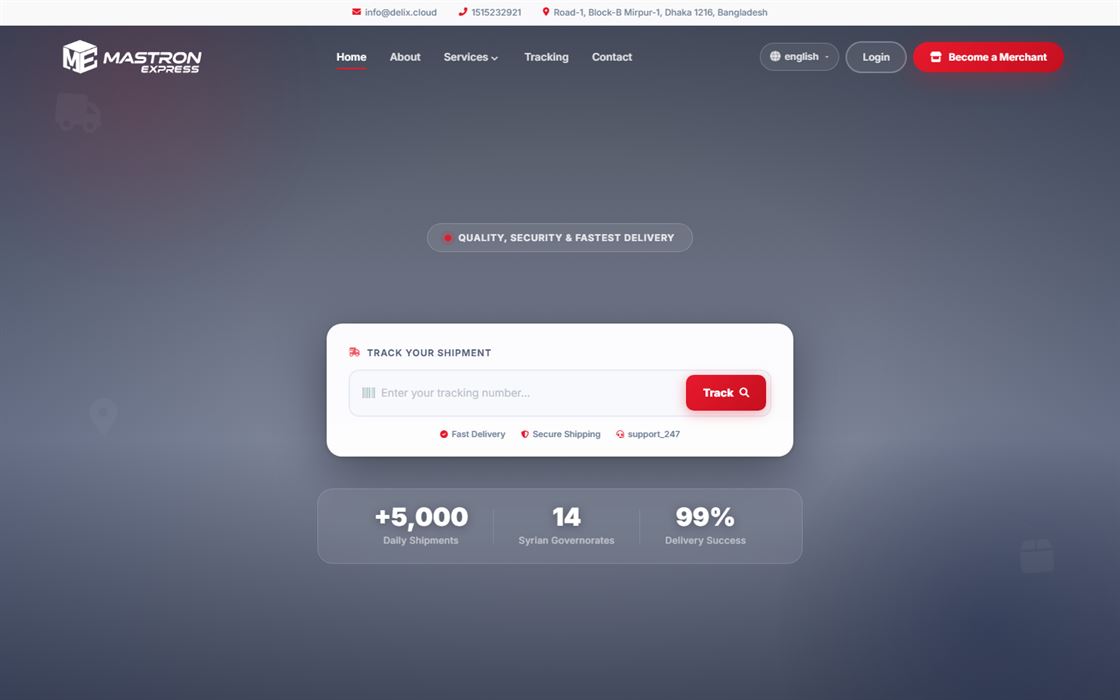
Mastron Express — Parcel & Courier System
Complete courier operation: parcel creation, tracking and status events, merchant and delivery‑man portals, live GPS tra...
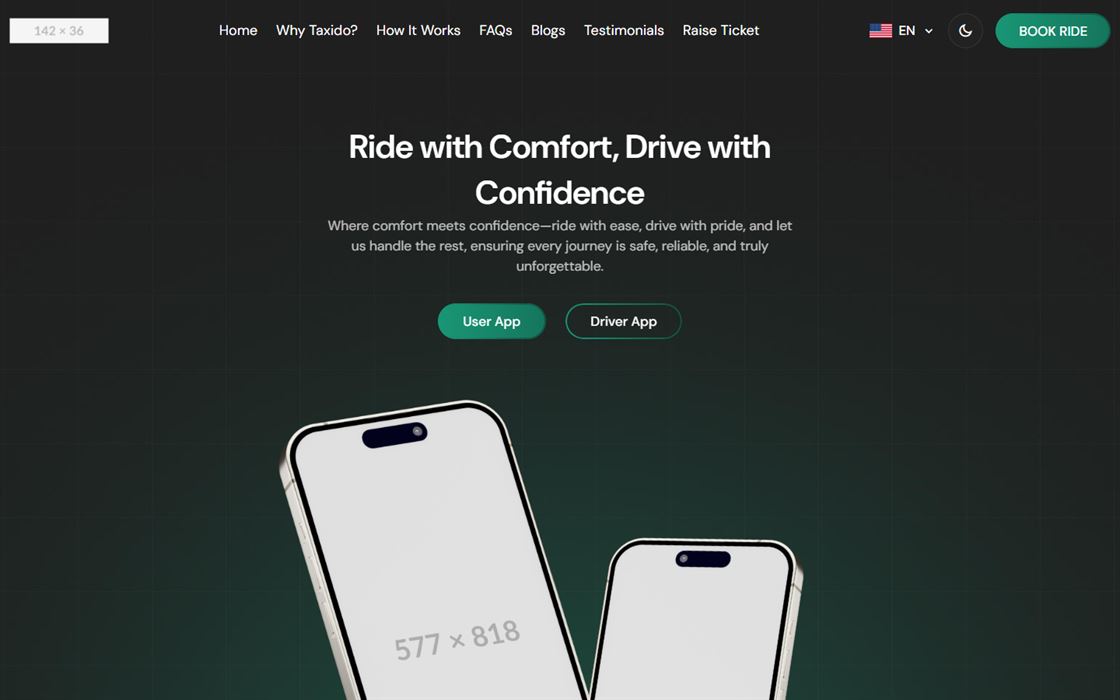
Premium Rides — Ride‑Hailing Platform
Ride‑hailing platform with rider and driver apps: trip requests, extra fees and taxes, chat with attachments, complaints...
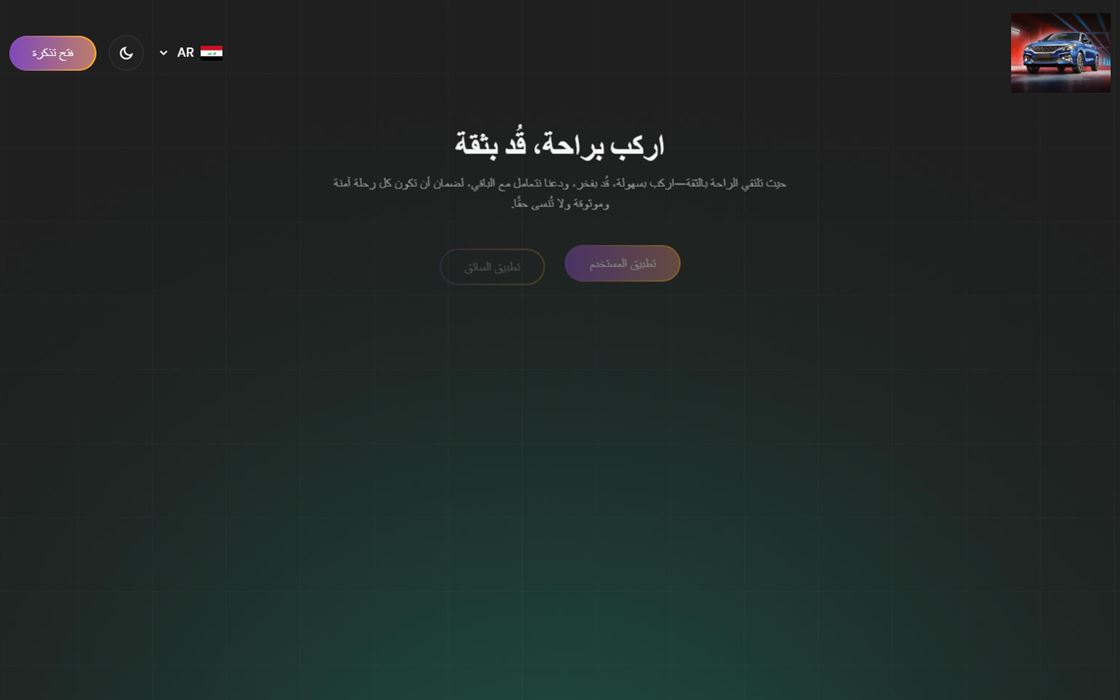
Taxiwatan — Ride Booking Platform
Ride booking with a fully Arabic interface: pricing and taxes, multi‑language and multi‑currency, notification and messa...